Dawn: Waking Under the Stars
If you’ve opted for a desert camp overnight — highly recommended — your day begins before sunrise. There’s something magical about opening your eyes in the pre-dawn darkness, the sky dotted with stars so bright it feels like someone spilled glitter across the universe.
The air is cold at this hour, a stark contrast to the blazing heat that will dominate later. A cup of strong mint tea or coffee warms you from the inside, and the first murmurs of desert life — distant footsteps of a camel, faint bird calls — start to stir.
Then, slowly, the dunes transform. The darkness recedes, and the sky turns a pale, burning orange. Watching the sun rise over the sand is nothing short of spiritual. Shadows stretch, ridges glow, and for a few precious minutes, the world feels utterly still and infinite.
Pro tip: Wake up early, even if it means sacrificing some sleep. Sunrise in the Sahara is worth every groggy minute.
Morning: Exploring the Dunes
By mid-morning, your energy kicks in, and it’s time to explore. Most travelers take guided camel treks or 4x4 tours. Walking on foot is also possible, but you’ll quickly understand why camels are called “ships of the desert.”
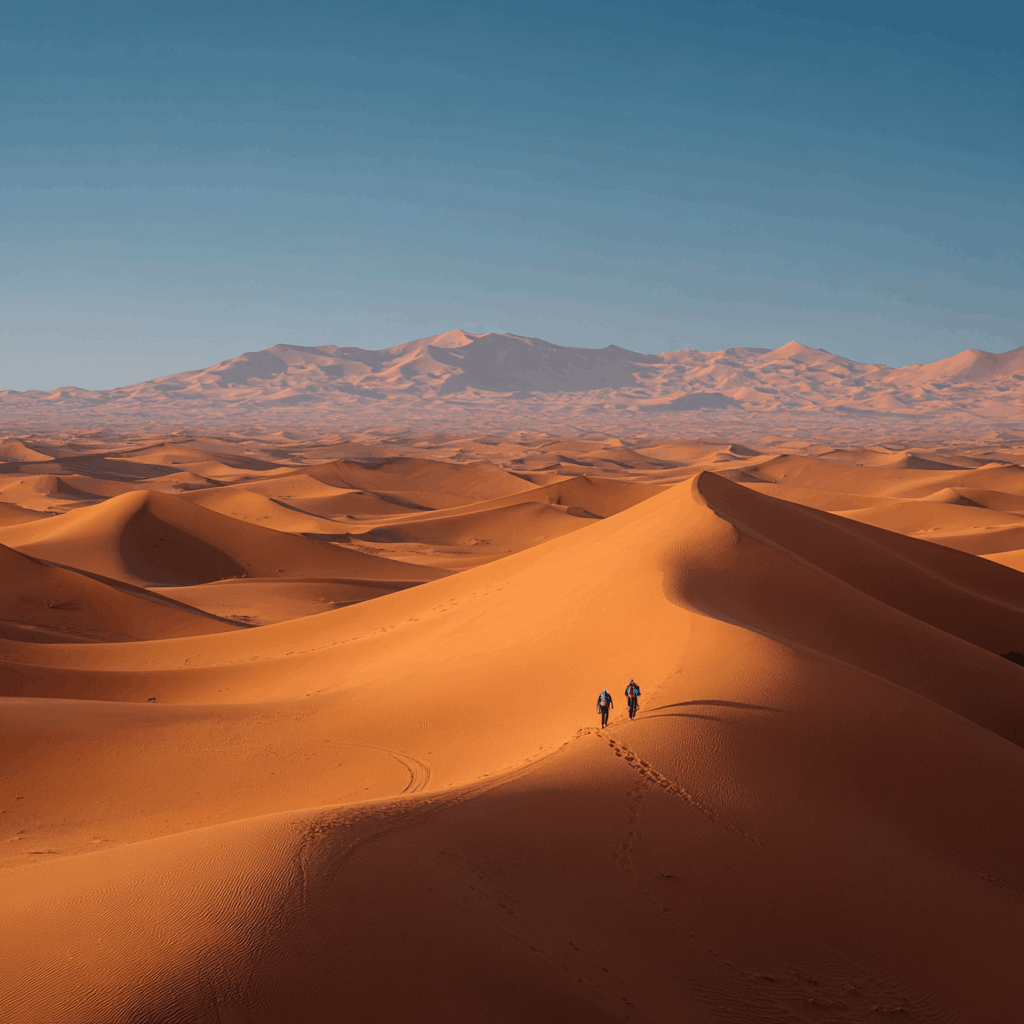
The dunes are constantly shifting, shaped by wind patterns in ways that make every step a little unpredictable. There’s a rhythm to walking on sand — slower than you expect, slightly disorienting, and strangely meditative.
Guides often point out ancient footprints, desert plants, and even signs of wildlife like desert foxes or lizards. The vastness makes you feel tiny, almost invisible — and yet deeply connected to the natural world.
Pro tip: Wear light, breathable clothing that covers your skin. The Sahara sun is intense, even in the morning. Sunglasses and a scarf for your head and neck are essential.
Midday: The Heat Sets In
By noon, the Sahara becomes relentless. Temperatures can soar past 40°C (104°F) in summer months. Shade is rare, so hydration is critical. Sipping water constantly is more than just a recommendation — it’s survival.
Many tours pause for lunch under a tent or small rock formation, serving simple, hearty meals. Couscous, fresh bread, dates, and tea are common. Meals are often communal, shared with fellow travelers or locals, providing a moment of connection amid the solitude of the desert.
Pro tip: Carry snacks and extra water. Electrolytes or sports drinks are helpful if you’re trekking on foot.
Afternoon: Adventures Off the Beaten Path
As the sun climbs higher, the desert’s magic changes. Some visitors opt for dune surfing — running or sliding down slopes on small boards. Others ride camels to reach remote areas where the dunes form natural amphitheaters, perfect for photography or quiet reflection.
If you’re traveling with a local guide, they may take you to hidden oases. These pockets of life in the desert — palms, small ponds, or wells — feel miraculous in their contrast to the surrounding sand. A moment sitting by an oasis, feeling the cool water and shade, is almost surreal.
This is also the time to practice desert mindfulness: listen to the wind, notice the patterns of sand, and watch shadows stretch across ridges in ways that seem almost impossible to capture with a camera.
Late Afternoon: The Light Changes Again
As the day progresses, the Sahara offers another spectacle. The harsh midday sun softens, and the golden sand starts to glow with warmer, richer tones. Dunes cast long shadows, forming dramatic shapes that photographers dream of.
Many travelers plan this hour for photography or simply to soak in the scenery. The contrast of the sky — often a deepening blue — with the warm sand is breathtaking. Silence dominates, interrupted only by the wind or the occasional distant voice of a fellow traveler.
Pro tip: Protect your camera from sand. Even the slightest gust can cause fine particles to damage equipment. A microfiber cloth and ziplock bags help.
Evening: Sunset and the Desert Sky
Sunset in the Sahara is a performance you won’t forget. The horizon ignites with vibrant reds, oranges, and purples, slowly fading into twilight. If you’re on a dune, you’ll notice the temperature dropping, shadows lengthening, and the desert preparing for its nightly transformation.
Many tours offer tea or snacks while you watch the sun sink behind rolling dunes. It’s a moment of pure calm — the kind that makes the long journey, the heat, and the sand worth every second.
Pro tip: Stay for sunset. It’s often better than sunrise in terms of color intensity and photography opportunities.
Night: Stars Like You’ve Never Seen
After sunset, the Sahara’s magic continues. With little to no light pollution, the night sky explodes with stars. The Milky Way stretches overhead in vivid detail. Planets, constellations, and shooting stars feel much closer here than anywhere else.
Campfires in desert camps create communal spaces where travelers share stories, sip tea, and feel connected to the universe in a way city life rarely allows. Local guides often tell tales of the desert, blending history, culture, and myth.
If you’ve ever wondered what it feels like to sleep under the cosmos, the Sahara delivers — the cold night air, the sound of wind across sand, and the endless sky above make you feel both tiny and infinite.
Practical Tips for Spending a Day in the Sahara
Travel with a guide — the desert is beautiful but can be disorienting. Safety first.
Dress in layers — temperatures swing dramatically from morning to night.
Bring plenty of water — dehydration is serious.
Protect against the sun — sunglasses, sunscreen, and head covering are essential.
Footwear matters — sturdy sandals or lightweight shoes are best for sand.
Plan meals carefully — simple, portable food works best.
Camera protection — sand can ruin electronics; keep them in sealed bags when not in use.
Mind your health — desert conditions are extreme; know your limits.
One day in the Sahara desert is unlike any other travel experience. It’s a day of contrasts: freezing mornings and scorching afternoons, silence and wind, monotony and breathtaking beauty. It challenges you physically, inspires you mentally, and humbles you spiritually.
Whether you’re watching the sun rise over rolling dunes, riding a camel across endless sands, or lying under a star-strewn sky at night, the Sahara reminds you that the world is vast, wild, and utterly extraordinary.
Even one day here leaves a mark — a story you’ll tell for years, a memory you’ll revisit whenever life feels too small, too busy, or too ordinary.
So pack light, hydrate often, respect the desert, and let the Sahara show you a world unlike any other.