Day 1: Soak, Stroll & Sunset
Morning: Thermal Bath Ritual
Start your weekend the Hungarian way — in hot water. Budapest sits on a network of natural hot springs, and the city built an entire bathing culture around them.
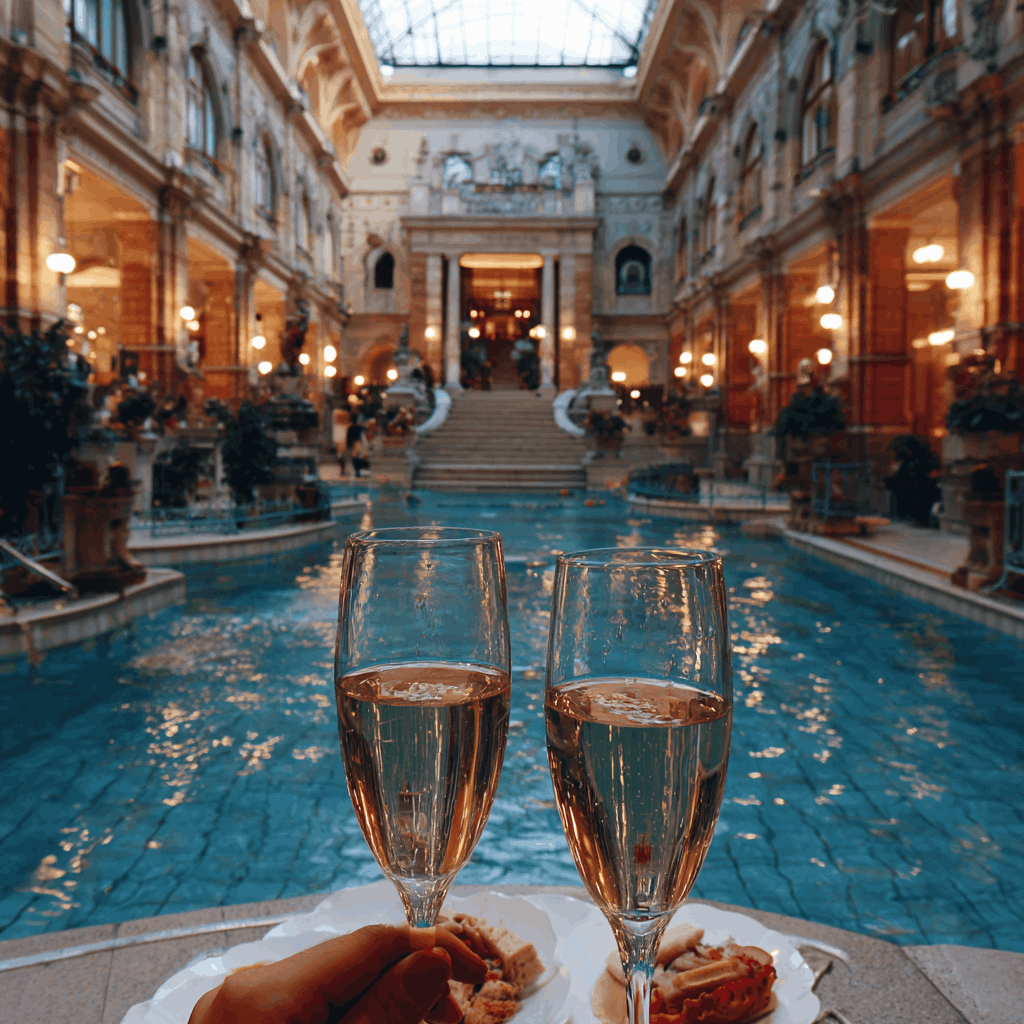
Széchenyi Baths (in City Park) are the classic choice. Picture yellow Neo-Baroque buildings, steaming outdoor pools even in winter, and locals playing chess half-submerged in hot water.
Gellért Baths are more elegant, with art nouveau tiling and stained glass. It feels like swimming in a cathedral.
Spend a few hours here. Alternate between hot pools, cold plunges, and saunas. You’ll feel both energized and blissfully lazy at the same time.
Afternoon: Walk the Danube
Dry off, grab a coffee, and head to the river. The Danube slices Budapest in two — Buda on one side, Pest on the other. Crossing one of the grand bridges (like the Chain Bridge or Liberty Bridge) is essential.
On the Buda side, climb — or take the funicular — up to Buda Castle Hill. The view across the river, with Parliament standing tall on the Pest side, is breathtaking. Don’t rush; wander through cobbled streets, check out Matthias Church, and take your time at Fisherman’s Bastion, where the fairytale towers make you feel like you’ve stepped into a storybook.
Back on the Pest side, just strolling along the embankment feels romantic. Couples linger, street musicians play, and the light on the water at dusk is pure magic.
Evening: Dinner & Drinks
Budapest’s food scene is hearty, spicy, and best enjoyed with a beer or wine.
Try goulash (a rich beef soup), chicken paprikash, or lángos — fried dough slathered with sour cream and cheese.
For a lighter bite, duck into a wine bar and try local Hungarian wines (the whites are especially good).
And for drinks after dinner? This is where Budapest shines.
Day 1 Night: Ruin Bars
Ruin bars are Budapest’s invention — old, crumbling buildings turned into bars decorated with mismatched furniture, neon lights, and random junk that somehow works as art.
Szimpla Kert is the original and still the most iconic. Think graffitied walls, vintage couches, a bathtub turned into a seat, and a dozen little nooks to drink in.
Other options like Instant-Fogas or Mazel Tov (a more polished, Middle Eastern-inspired space) are equally fun.
The vibe is casual but electric. You’ll meet locals, travelers, artists, students — everyone mixes here. Stay late, and you’ll start to understand why people fall in love with Budapest weekends.
Day 2: Markets, Museums & Romance
Morning: Central Market Hall
Fuel up with breakfast at Nagycsarnok (Central Market Hall). This grand building is packed with stalls selling paprika, cured meats, cheeses, and pastries. Grab a coffee and a pogácsa (savory pastry) and wander through the smells and colors.
If you want souvenirs, this is the place: Hungarian paprika, embroidered textiles, and bottles of Tokaji wine.
Midday: Culture Fix (Light Version)
You don’t need to spend hours in museums (it’s a weekend, after all), but a quick cultural hit makes the trip richer.
Hungarian Parliament Building — even just admiring it from the outside is worth it. Its spires and domes are some of the most beautiful architecture in Europe.
House of Terror Museum — sobering but powerful, it tells the story of Hungary under fascism and communism.
Museum of Fine Arts — if you’re into classical art, this is where you’ll find El Greco, Goya, and Rembrandt.
Afternoon: Island Escape
For a breather, head to Margaret Island, a green oasis right in the Danube. Rent a bike or just stroll. There are gardens, fountains, and even the ruins of an old monastery. It’s quiet, romantic, and perfect for slowing down.
If the weather’s good, bring a picnic.
Evening: Danube at Night
Save your most romantic moment for last. At night, Budapest glows. Parliament lights up, bridges sparkle, and the river reflects it all back.
Options:
Take a night cruise on the Danube — short, affordable, and unforgettable.
Walk hand in hand along the embankment and stop at the Shoes on the Danube Bank memorial — simple bronze shoes left in memory of Holocaust victims. It’s moving and haunting.
Then finish your night with a last drink at a rooftop bar like 360 Bar, with views over the city lights.
Practical Tips
Getting Around: Budapest’s metro is easy to use, and trams are iconic (ride Tram 2 for the best river views). Walking works too — most of the city center is flat and pedestrian-friendly.
Money: Hungary uses the forint, not the euro. Cards are widely accepted, but small cash helps at markets and cafés.
When to Go: Spring and autumn are ideal — warm enough to walk around, fewer crowds. Winter is magical too, especially with the Christmas markets.
Romance factor: Budapest is underrated as a couples’ destination. Between candlelit dinners, nighttime river walks, and spa days, it has all the ingredients.
Final Thoughts
Budapest is proof that you don’t need weeks to get under a city’s skin. In just two days, you can soak in baths where emperors once relaxed, drink in bars that feel like art projects, and watch the Danube shimmer at night with someone’s hand in yours.
It’s historic without being heavy, romantic without being cliché, and fun without trying too hard.
So next time you’re hunting for a weekend escape in Europe, skip the usual suspects. Budapest has everything you want — and maybe a few surprises you didn’t know you needed.